
August 5, 2026 · Cowboy Firearms
Cowboy action shooting is one of the most active disciplines in Southern Nevada, and it is also one of the hardest on equipment. Competitors run single action revolvers, lever-action rifles, and side-by-side shotguns through stages that demand speed and absolute consistency, using designs that in many cases are more than a century old. That combination puts wear in places general firearm service does not always look.
People often ask what makes cowboy action gunsmithing different from ordinary repair work. The short answer is focus. A general repair asks whether a firearm functions safely. Cowboy action work asks whether it functions safely and consistently, stage after stage, under a timer, with the same feel every time you pick it up. Getting there involves a different set of checks and a different definition of finished.
What Separates It From General Gunsmithing
Most firearm repair is reactive. Something broke, something stopped feeding, something will not eject, and the job is to find the cause and correct it. That work matters, and we do plenty of it. Cowboy action work overlaps with it but adds a second layer, refining how the gun behaves when nothing is technically wrong with it.
A single action revolver can pass every safety check and still feel gritty through the hammer stroke. A lever gun can cycle a full magazine on the bench and still bind when it is worked quickly from the shoulder. A coach gun can open and close smoothly and still leave one hull behind under pressure. None of those are failures in the ordinary sense. They are the difference between a gun that works and a gun that works the same way every single time, and closing that gap is what this kind of work is about.
The Three Platforms We See Most
Single Action Revolvers
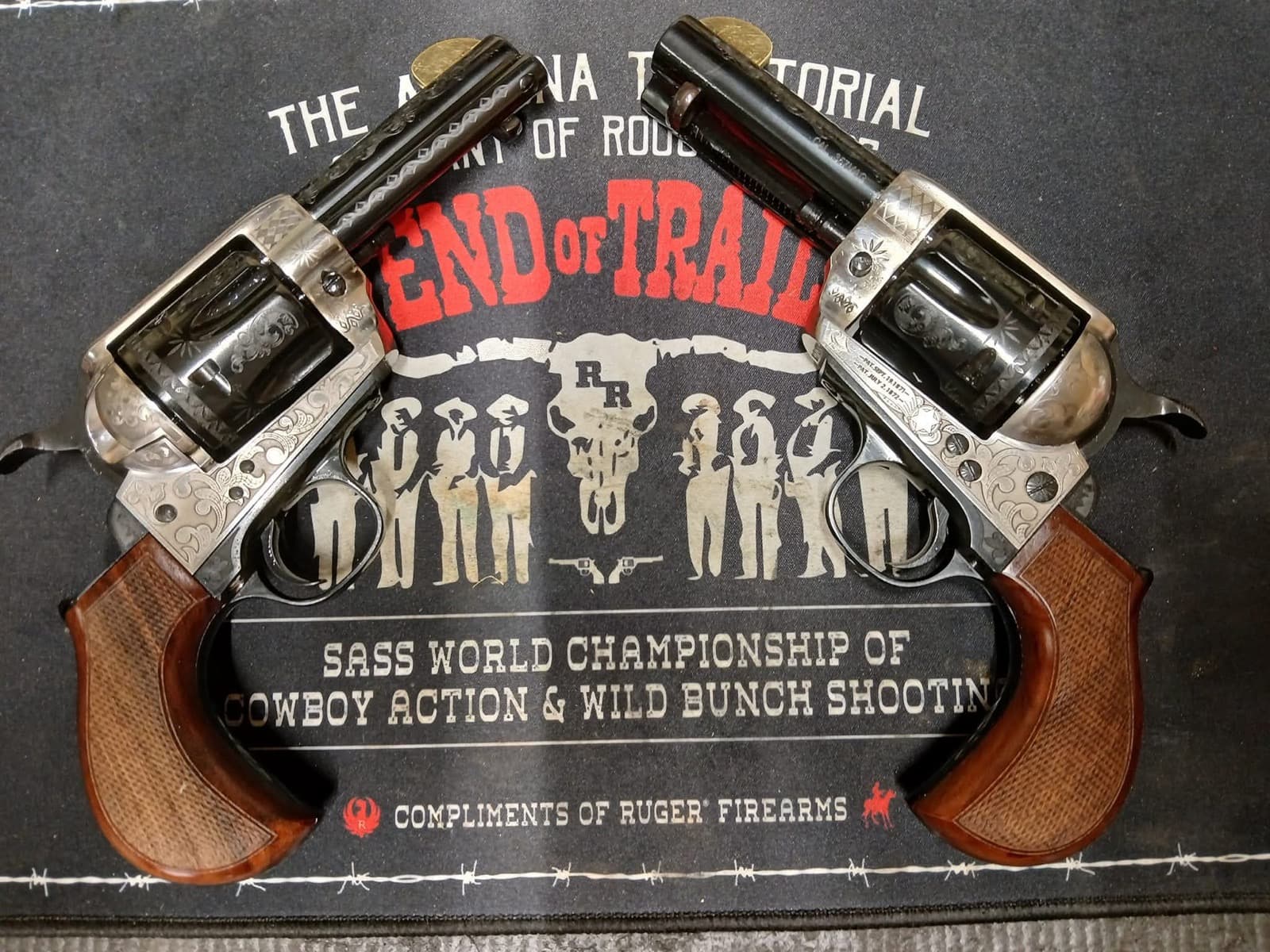
Single actions are the heart of the sport, and timing is where they live or die. Timing describes whether each chamber carries up and locks in place before the hammer falls. When it drifts, the symptoms show up as a cylinder that feels like it is catching, inconsistent lockup, or a hammer that does not feel the same on every chamber. We check timing and lockup on every revolver that comes in for cowboy action work, because everything else, including how light the action can safely be made, depends on that foundation being right.
Lever-Action Rifles
Lever guns are judged on stroke. A rough carrier, a burr on a bearing surface, or a magazine tube issue turns a smooth cycle into something that hangs at exactly the wrong moment. Short stroking, where the lever is not run fully and the next round does not pick up, is a common complaint, and it is often a symptom rather than a technique problem. We look at carrier and bolt travel, feeding and extraction, the loading gate, and the magazine tube together, because those parts fail as a system rather than in isolation.
Coach Guns and Side-by-Sides
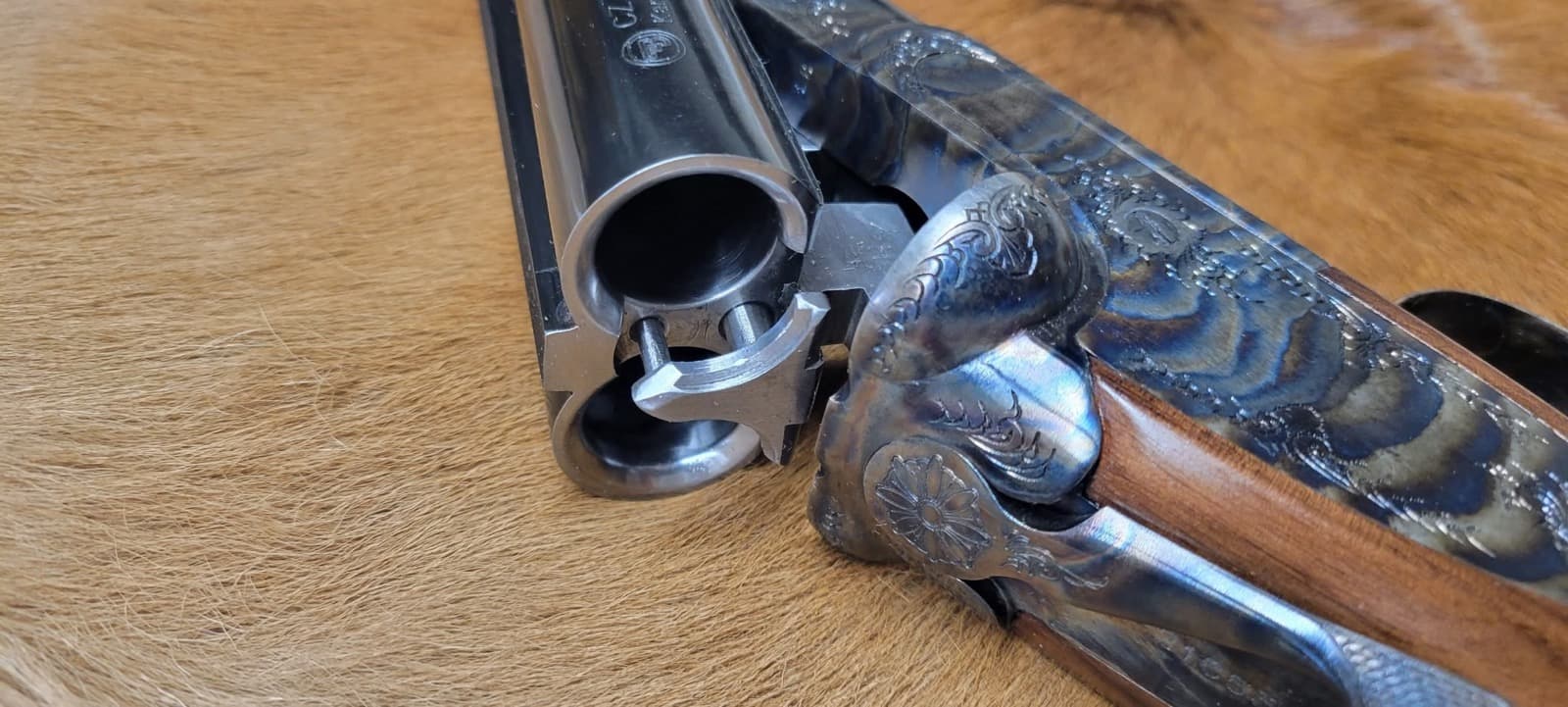
Double guns look simple and are anything but. The measure of a good one in this sport is how easily it opens and how cleanly both hulls clear. Ejector and extractor timing, lockup, opening and closing feel, and trigger and safety function all get checked. A gun that has been through a long season often shows its wear here first, and the owner usually describes it as the gun feeling stiff rather than as a specific fault.
What Slicking Up an Action Really Means
The phrase gets used loosely, and it is worth being precise about it. Slicking up an action is not about removing metal until something feels light. Done that way it produces a gun that feels wonderful on the bench and becomes unreliable, or unsafe, in use.
The real work is diagnostic. Something in the action is dragging, and the job is to find which surfaces are actually causing it rather than smoothing everything indiscriminately. Once those surfaces are identified they are addressed carefully and the parts are fitted, and spring rates are set to suit the gun rather than simply reduced. The goal is a shorter, cleaner, more predictable stroke that still has positive engagement and reliable ignition behind it.
This is also the point where we tell customers plainly that this is not work to attempt at home. Engagement surfaces in a fire control group are unforgiving, and the consequence of getting them wrong is not a gun that feels rough. It is a gun that is not safe. If your action feels gritty, the right next step is an inspection, not a file.
Reliability Sets the Limit
Every shop that does this work has to decide where the line sits between feel and function. Ours is straightforward. Reliability sets the limit on how light an action goes, never the other way around. A trigger that breaks beautifully but does not reliably ignite a primer has failed at the only job that actually counts, and a match set that is a fraction faster but occasionally does not fire has cost you far more than it gained.
If a customer asks for something lighter than we think a particular gun will run reliably, we say so and explain why. Sometimes there is a different route to the same result, such as addressing bearing surfaces more thoroughly rather than reducing spring rate further. Sometimes the honest answer is that a part is worn past the point where tuning is the right fix, and replacement is the better path.
What We Check at Intake
Whether you bring in one revolver or a full match set, the intake conversation covers the same ground. Knowing what to expect makes the visit quicker.
- ◆How you shoot and which categories you compete in, since that shapes what matters on the gun
- ◆What the firearm is doing now that you would like changed, in your own words
- ◆Timing, lockup, and engagement surfaces on revolvers
- ◆Stroke, feeding, extraction, and magazine tube condition on lever guns
- ◆Opening feel, ejector and extractor timing, and safety function on double guns
- ◆Overall wear, and whether any component is past the point where tuning is appropriate
Serving Cowboy Action Shooters Across Southern Nevada
Our shop is in Pahrump, about an hour from the Las Vegas valley, and a good share of our cowboy action work comes from shooters travelling out from Las Vegas and Henderson. Many of them bring a full match set in one trip rather than making the drive twice, which also has the advantage of letting us tune the guns to feel consistent with each other rather than one at a time.
Desert conditions are part of the picture here. Fine dust works into an action in a way it simply does not in wetter climates, and shooters running black powder deal with fouling that can turn a smooth stroke gritty over a single weekend. Regular inspection is not fussiness in Southern Nevada, it is what keeps a match set running through a full season.
Mobile and onsite service support may be available by appointment, depending on the service requested and applicable federal, state, and local requirements. What can be handled away from the bench varies by job, so the practical step is to call and describe what you need.
When to Bring a Firearm In
The most common trigger for a visit is a gun that has started behaving differently. A revolver that used to feel the same on every chamber and no longer does, a lever gun that has begun hanging mid stroke, a double gun that is suddenly stiff to open. Those changes are worth having looked at before a match rather than after.
The other common reason is an older firearm that has never had a proper inspection. Inherited and reproduction guns both turn up regularly, and both benefit from someone knowledgeable confirming that they are safe and functioning as designed before they see heavy use.
If you are unsure whether what you are noticing is worth a visit, call the shop and describe it. We would rather talk it through than have you guess, and if it is something simple we will tell you that too. Our cowboy action gunsmithing page covers the full range of this work, and the contact page is the quickest way to arrange a drop off.
Frequently Asked Questions
What is cowboy action gunsmithing?
+
It is gunsmithing focused on the firearms used in cowboy action shooting: single action revolvers, lever-action rifles, and side-by-side or coach shotguns. The work centers on smoothing actions, correcting timing, improving feed and ejection reliability, and keeping older or reproduction designs functioning safely and consistently.
Is this different from regular firearm repair?
+
It overlaps but goes further. General repair asks whether a firearm functions safely. Cowboy action work also asks whether it behaves the same way every time under match conditions, which involves checking timing, engagement surfaces, and stroke rather than only correcting faults.
Can you make my action as light as possible?
+
We set the limit at reliable function. An action that is light but does not reliably ignite a primer has failed at the job that counts. If a request goes past what a particular gun will run reliably, we will say so and explain the alternatives.
Do you work on reproduction firearms as well as originals?
+
Yes. Modern reproductions are common in the sport and we service them alongside original firearms. We will tell you honestly if parts availability affects what is practical on a specific model.
Should I attempt any of this work myself?
+
No. Fire control engagement surfaces are unforgiving, and errors there produce an unsafe firearm rather than a rough one. If something feels wrong, the right next step is a professional inspection.
Do you serve customers from Las Vegas and Henderson?
+
Yes. We are located in Pahrump and regularly work with cowboy action shooters travelling from Las Vegas, Henderson, and across Southern Nevada. Calling ahead lets us plan for your visit.