
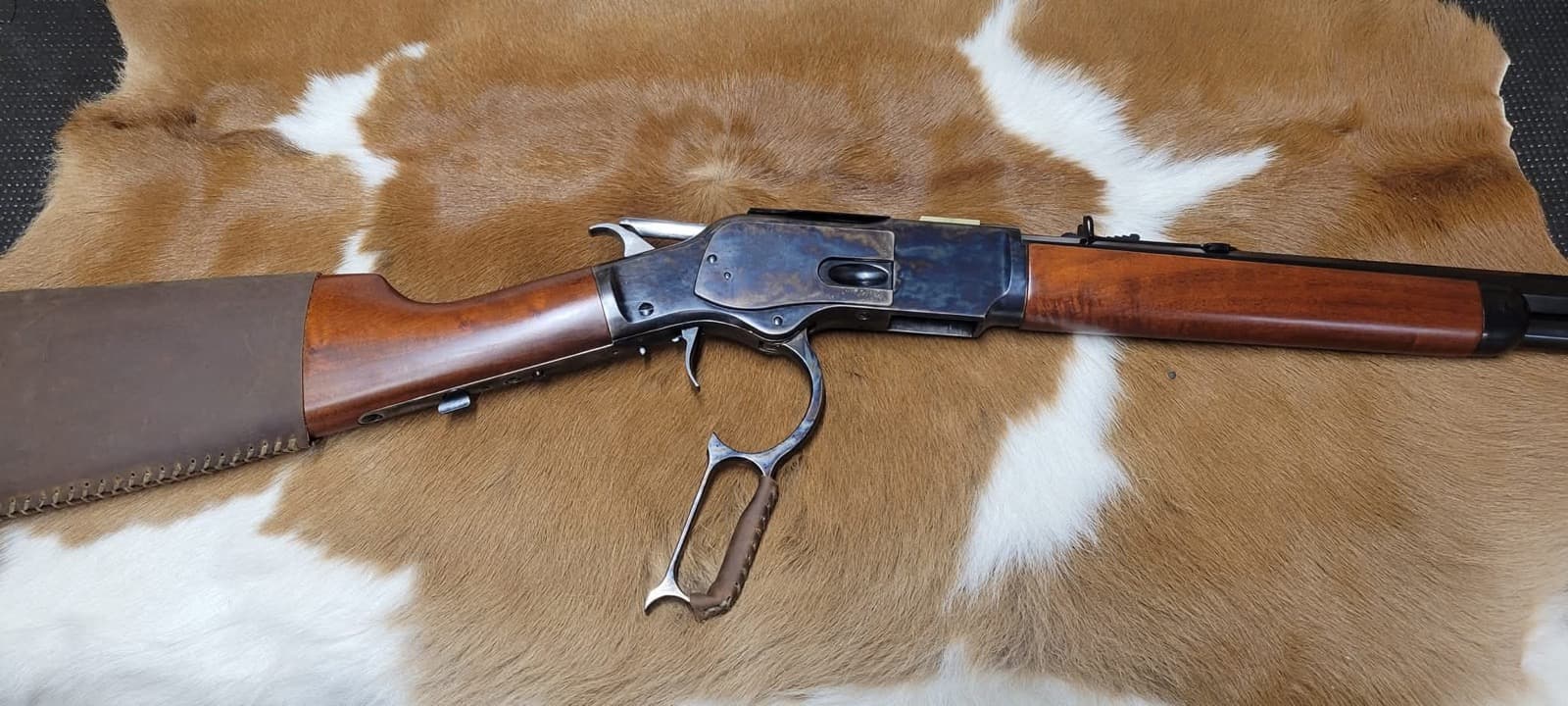
August 19, 2026 · Cowboy Firearms
The lever-action rifle is the workhorse of cowboy action shooting. It is also the platform where small mechanical problems show up as lost time most obviously. A revolver that is slightly rough is annoying. A lever gun that hangs mid stroke, or fails to pick up the next round, stops a stage cold.
Owners usually describe the problem in terms of feel rather than mechanism. The rifle catches. It feels notchy. It short strokes when I run it fast. Those descriptions are useful, and they usually point at a handful of causes that a gunsmith can identify and address.
What a Good Stroke Feels Like
Before diagnosing problems it helps to describe the target. A well sorted lever gun has a stroke that is short, even, and predictable. There is no point in the travel where effort suddenly increases, no sensation of something catching as the carrier rises, and no need to think about the rifle while running it. The shooter should be able to work the lever the same way every time and get the same result.
That consistency is the whole point. Under a timer, a rifle that occasionally requires a second effort is worse than one that is uniformly a little stiff, because the shooter cannot build a rhythm around it. Predictability matters more than lightness.
Common Causes of a Rough or Binding Stroke
Bearing Surfaces and Carrier Travel
The most frequent cause is simple friction in the wrong places. Bolt and carrier travel involves several surfaces sliding past one another, and roughness on any of them registers to the shooter as a catch. On a rifle that has seen a lot of use, or one that left the factory with a less refined finish inside, this is usually where we start looking.
Short Stroking and Why It Is Often Mechanical
Short stroking gets blamed on technique more often than it deserves. Yes, a shooter who does not run the lever fully will fail to pick up the next round. But a rifle that requires more effort at a particular point in the stroke actively encourages the shooter to stop short, because the hand naturally hesitates where resistance increases. Correcting the mechanical cause frequently resolves what looked like a technique problem.
Feeding and Extraction
Rounds that do not rise cleanly onto the carrier, or spent cases that do not clear reliably, produce their own set of symptoms. These can involve the carrier, the extractor, or the condition of the magazine tube and follower. They are checked together because a problem in one place frequently presents as a symptom somewhere else.
The Loading Gate and Magazine Tube
The loading gate takes a lot of use and a lot of thumb pressure, and it is easy to overlook when a rifle is being assessed. A magazine tube with a tired spring or a follower that is not moving freely will produce feeding problems that look like carrier issues at first glance. Both are part of a proper inspection.
What Service Covers
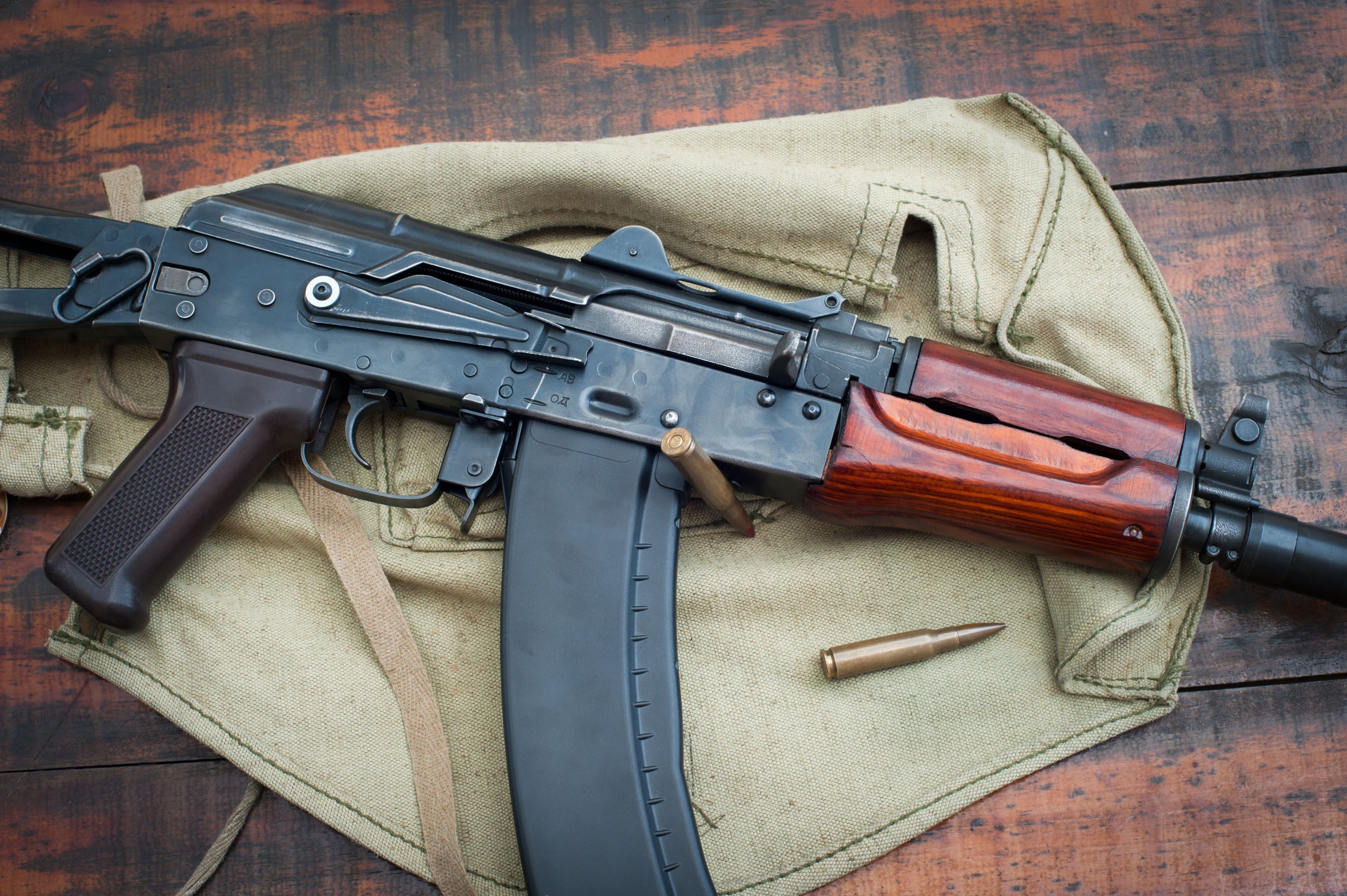
A lever-action service on our bench starts with a conversation about how the rifle is used and what it is doing now. From there the action comes apart for inspection, and the surfaces actually causing drag are identified rather than assumed.
- ◆Assessment of carrier and bolt travel to locate where the stroke is binding
- ◆Addressing the specific bearing surfaces responsible, rather than smoothing indiscriminately
- ◆Checking feeding and extraction through the full cycle
- ◆Inspecting the loading gate, magazine tube, and follower
- ◆Confirming trigger and safety function before the rifle leaves
- ◆Function testing the rifle through its full range of operation
As with revolver work, we are describing scope rather than procedure. Lever gun internals involve parts whose fit determines whether the rifle fires safely, and that is bench work with proper measuring tools, not something to take on at the kitchen table.
Original Rifles and Modern Reproductions
Both turn up regularly, and both are worth servicing. Modern reproductions are common in the sport and are generally well made, though the internal finish varies and there is often meaningful improvement available in how smoothly they run. Original rifles bring their own considerations, chiefly the age and condition of the parts and whether replacements are practical to source.
If a rifle is genuinely old, the first question is not how to make it faster but whether it is safe and sound as it stands. We will tell you honestly if a component is worn past the point where refinement is the right answer, and what the realistic options are.
The Rifle Has to Suit What You Feed It
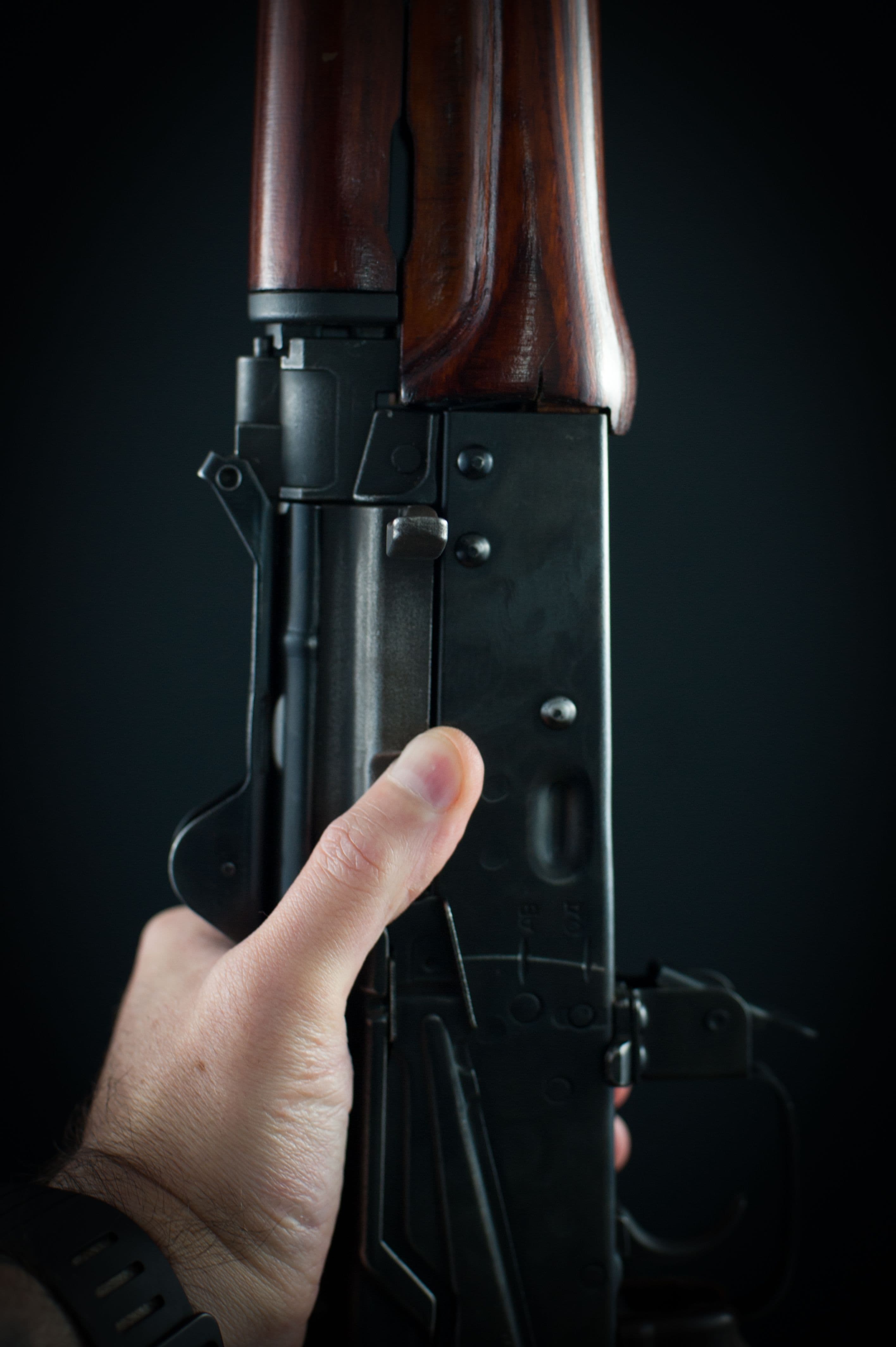
A lever gun is a tube fed design, and it is more particular about the shape and length of what runs through it than most shooters expect. Two boxes of the same nominal cartridge can differ in overall length and bullet profile, and a rifle that runs one flawlessly can hesitate on the other. This is one of the most common causes of feeding complaints we see.
We are not going to publish load data or make recommendations about what you should be shooting, and you should be sceptical of any shop that does so casually. What we will say is that if you have changed what you run through a rifle and feeding problems appeared around the same time, that connection is worth mentioning at intake. It genuinely changes what we look at first.
The practical step, if you are able, is to bring a small sample of the ammunition you actually compete with when you drop the rifle off. Function testing against what the rifle will really be fed is far more useful than testing against something else and hoping it transfers. If you shoot more than one type, tell us that as well.
Maintenance Between Matches
Most of what keeps a lever gun running well is unglamorous upkeep rather than gunsmithing. Keeping the action reasonably clean, keeping dust out of it in transport and storage, and paying attention to how the stroke feels from one weekend to the next will catch most developing problems early.
The habit worth building is noticing change rather than absolute condition. Nobody can tell you exactly how your rifle should feel, but you know how it felt last month. A stroke that has become heavier, a catch that has appeared, or feeding that has become less certain are all signals, and acting on them early usually means a smaller job than waiting until something stops working entirely.
Desert Conditions and Lever Guns
Southern Nevada is hard on this platform specifically. Fine dust finds its way into a lever action readily, and it does not need much to turn a smooth stroke into a gritty one. Shooters running black powder have the additional problem of fouling, which can noticeably change how a rifle feels over the course of a single weekend of shooting.
This is why we encourage competitors in Pahrump, Las Vegas, and Henderson to treat inspection as routine rather than reactive. A rifle that is checked between seasons is a great deal less likely to develop a problem mid match, and small issues found early are usually cheaper to resolve.
When to Bring a Lever Gun In
Bring it in if the stroke has changed, if you are short stroking more than you used to, if rounds are not feeding cleanly, or if spent cases are not clearing reliably. Bring it in as well if the rifle is new to you or has been stored for a long period, since a baseline inspection is worth having before heavy use.
Many customers bring their lever gun in alongside their revolvers and coach gun so the whole match set is looked at together. That is often the most efficient approach, particularly if you are driving out from the Las Vegas valley. Our rifle work and cowboy action gunsmithing pages have more detail, and you can arrange a drop off through the contact page.
Frequently Asked Questions
Do you work on lever-action rifles?
+
Yes. Lever gun work includes smoothing the action stroke, addressing binding or short stroking, correcting feed and extraction problems, and general inspection. We service both original and modern reproduction lever-action rifles from most major manufacturers.
Is short stroking my fault or the rifle's?
+
It can be either, and often it is both. A rifle that gets noticeably harder to work at one point in the stroke encourages the hand to stop short there. Correcting the mechanical cause frequently resolves what looked purely like a technique issue.
My lever gun cycles fine on the bench but binds when I run it fast. Why?
+
That pattern usually points at friction that only becomes noticeable at speed, or at a feeding issue that a slow cycle gives time to resolve itself. It is worth an inspection rather than guesswork.
Are reproduction lever guns worth having worked on?
+
Often yes. Reproductions are generally well made but internal finish varies, and there is frequently meaningful improvement available in how smoothly the action runs.
How does desert dust affect a lever action?
+
Fine dust works into the action readily and can turn a smooth stroke gritty quickly. Black powder fouling compounds it. Regular inspection and cleaning is what keeps a rifle running through a Southern Nevada season.
Can I have my whole match set looked at in one visit?
+
Yes, and many customers do, particularly those driving from Las Vegas or Henderson. It also lets us tune the guns to feel consistent with each other.