
August 13, 2026 · Restoration
Restoration is the service where customers most often arrive without knowing what they want. They know the firearm matters to them, they know it is not in the condition it once was, and beyond that the question is open. That is a perfectly reasonable place to start, and the conversation that follows is more valuable than any specific technique.
The central tension is simple to state and genuinely difficult to resolve: a firearm can be made to function safely, and it can be made to look new, and those are not the same project. Deciding how far to go on something that carries family history is a judgement, and it is one the owner has to make rather than the shop.
Function and Appearance Are Separate Decisions
It helps enormously to split the question in two, because they have different answers and different stakes.
Function is not really negotiable if the firearm is going to be used. Either it is safe and works as designed or it is not, and there is no sentimental argument for leaving a mechanical problem in place on a gun someone intends to fire. Timing on a revolver, lockup on a double gun, a cracked component anywhere, bore condition after long storage: these get addressed or the firearm does not go back into service.
Appearance is entirely a choice, and it is reversible only in the sense that you can always do more later. You cannot put original finish back once it has been removed. That asymmetry is the single most useful thing to understand before deciding anything.
What Original Wear Actually Represents
Honest wear is not damage. A worn spot on a receiver where a hand has rested for fifty years, thinning finish at the muzzle from a saddle scabbard, a stock darkened where it was carried: those marks are the record of the firearm having been used by someone. On a family piece that is frequently the reason it matters.
There is also a value dimension on some firearms. Collector interest often favours original condition over restored condition, sometimes substantially, and a well-intentioned refinish can reduce what a firearm is worth. That does not apply to everything, but it applies often enough that it is worth establishing before work begins rather than discovering afterwards.
Damage is a different matter. Active corrosion, cracked wood, pitting that is progressing, or a finish that has failed to the point where it is no longer protecting anything are problems rather than character, and leaving them alone means the firearm continues to deteriorate.
Record What You Have Before Anything Changes
A small piece of advice that costs nothing and that people are consistently glad they took. Before any work begins, photograph the firearm properly. All sides, the markings, the stock, the finish, and anything unusual about it.
Part of the reason is practical. A good record is useful for insurance and for whoever inherits the firearm after you. But it matters for the decision itself as well. Once a stock has been refinished or metal has been reblued, the previous condition exists only in memory, and memory is generous about things that no longer exist. A photograph is a fairer reference point than recollection.
Write down what you know while you can, too. Who owned it, roughly when, what it was used for, and any story attached to it. On family firearms this information usually lives with one person, and it is lost quietly rather than dramatically. The gun outlasts the memory of it almost every time, and a page of notes tucked in the case is worth more than most of the work we could do to it.
A Useful Way to Frame the Decision
When customers are unsure, we find it helps to ask what the firearm is going to be from here rather than what should be done to it. The answer usually settles the rest.
- ◆A firearm that will be shot regularly, where function and durable protection matter most
- ◆A firearm that will be shot occasionally, where safe function matters and appearance is secondary
- ◆A piece that will be displayed and handled but not fired, where character and stability lead
- ◆A keepsake that will be stored, where the priority is stopping deterioration
- ◆A firearm that may be passed on or sold, where original condition may carry value
Most family firearms fall into the middle categories, and for those the honest recommendation is frequently less work than the owner expected. Mechanical attention so it functions safely, a proper clean, stabilising anything that is actively deteriorating, and leaving the character alone. That is a smaller invoice than a full cosmetic restoration and it is often the better outcome.
Where Restoration Gets Difficult
Wood
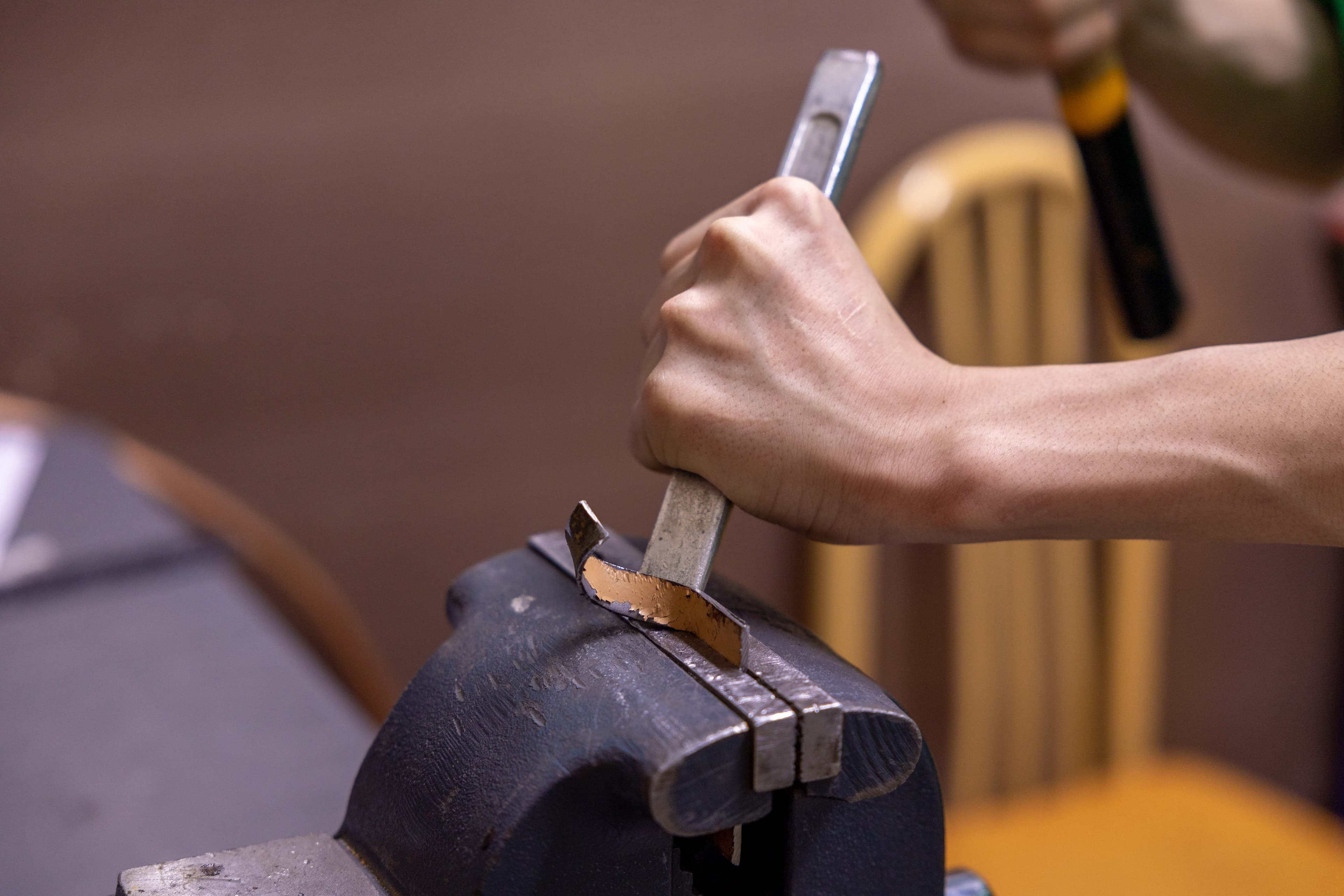
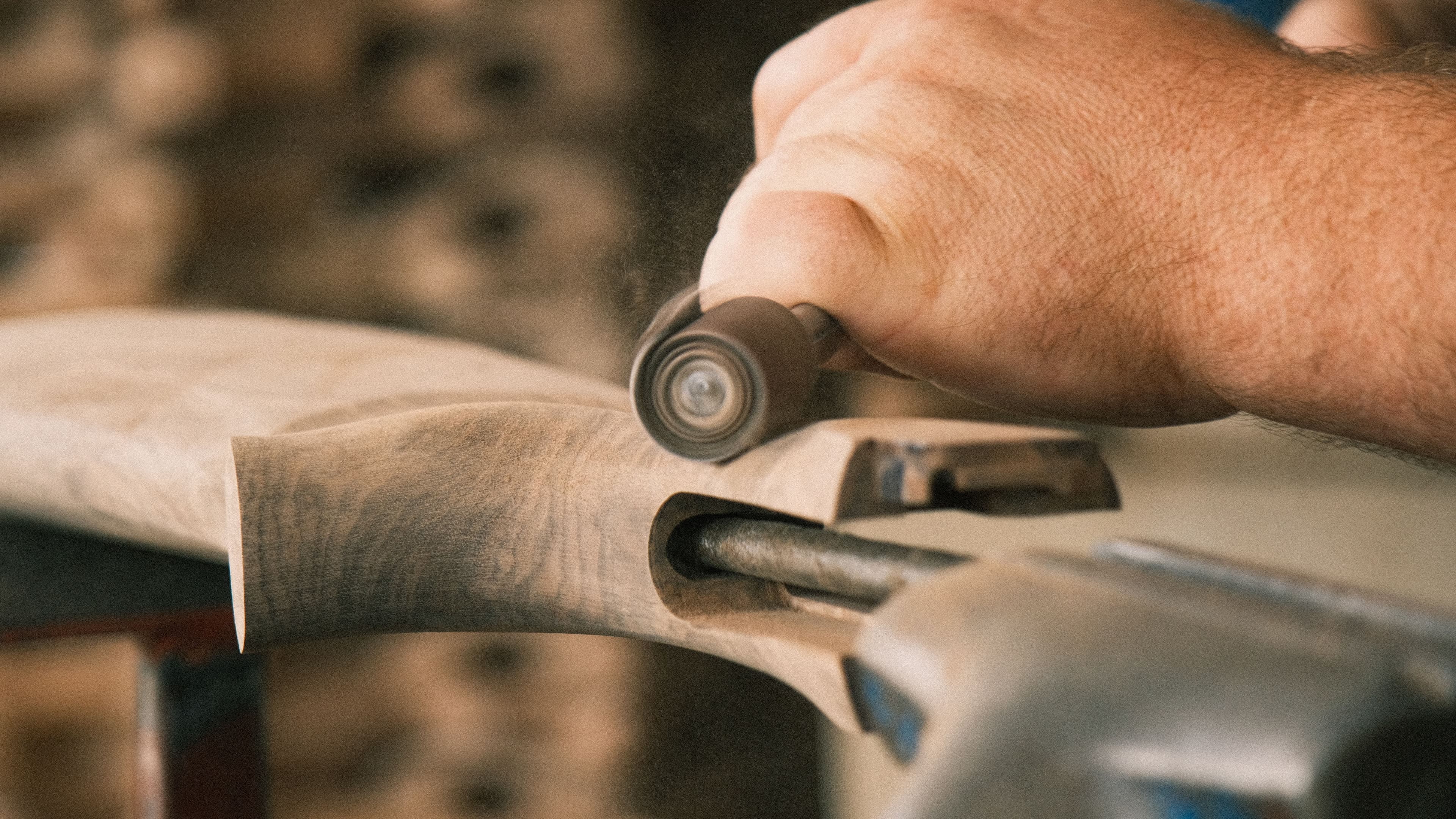
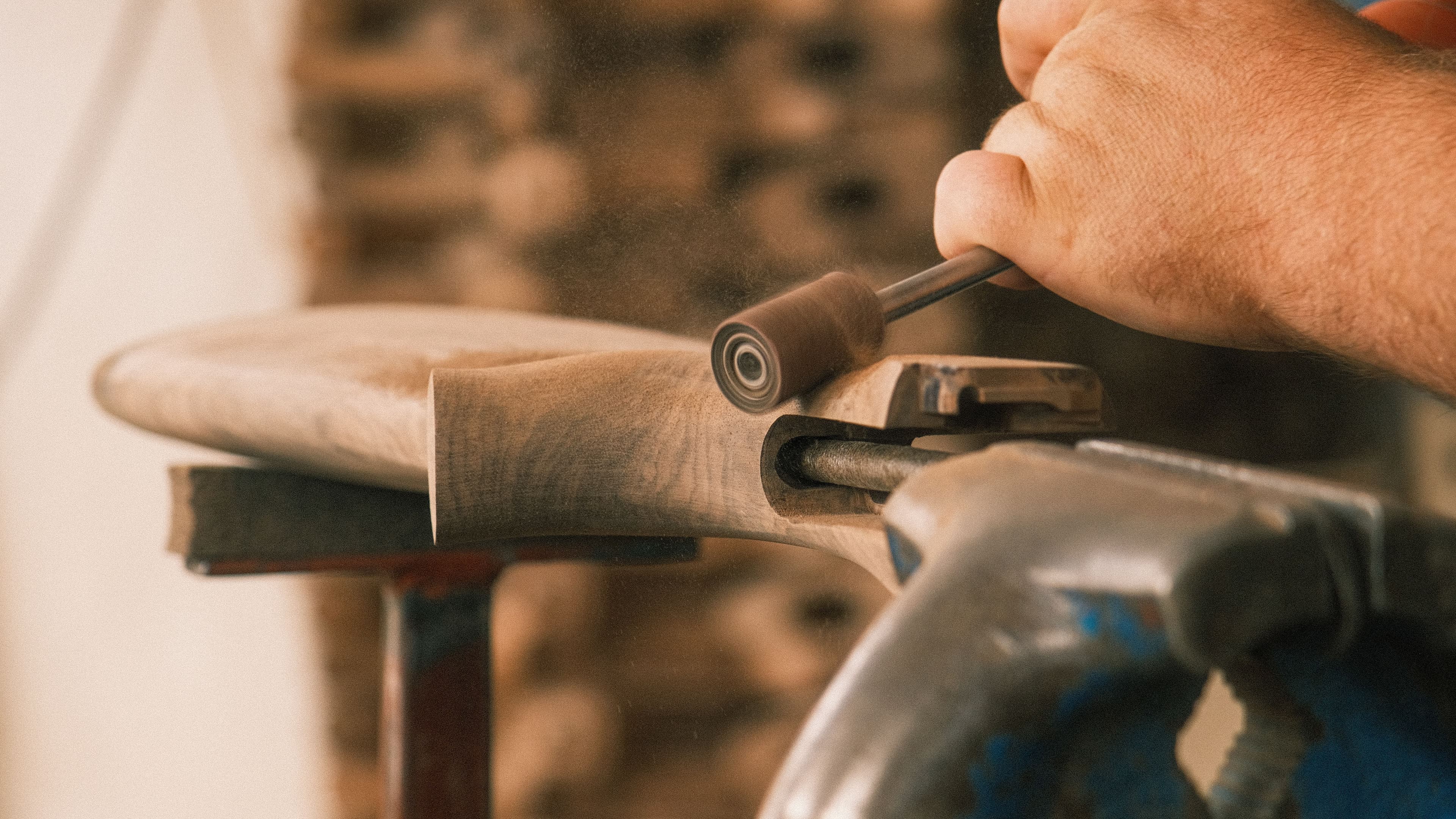
Stocks carry the most visible history and are the most tempting to refinish. They are also where the difference between conservative and aggressive work is starkest. Sanding removes wood permanently, along with the sharp edges of stampings, checkering definition, and the surface character that took decades to develop. Cleaning, stabilising a crack, and reviving a finish are very different propositions from taking a stock back to bare wood.
Metal Finish
The decision people ask about most. Light surface corrosion can frequently be dealt with conservatively without a full refinish. Once pitting has developed, the choice becomes starker, because removing it means removing metal, and that has its own consequences for the firearm's originality and sometimes its dimensions.
There is also a middle path that customers frequently do not know exists. A firearm can be cleaned, stabilised, and protected without being made to look new, and on a piece with history that is often the outcome that satisfies everyone. It is worth asking about rather than treating the choice as being between leaving it entirely alone and refinishing it completely.
Parts Availability
The practical constraint that decides more projects than aesthetics do. On older and discontinued firearms, a worn component may simply not be replaceable with an original, which leaves the options of a reproduction part, having something made, or accepting the firearm as it is. We will tell you honestly which of those applies before you commit to anything.
How We Scope a Restoration
The sequence is deliberate, and inspection comes before any decisions about appearance.
- ◆A conversation about the firearm's history and what you want it to be from here
- ◆Full inspection, including whether it is safe and what is actually wrong
- ◆An honest view on whether original condition is worth preserving on this firearm
- ◆Options laid out from conservative to comprehensive, with costs for each
- ◆Your decision, with no assumption that more work is better
- ◆The agreed work, with a call if something unexpected turns up
- ◆Function testing before it goes back to you
That third point is where we try to be genuinely useful rather than simply agreeable. If we think refinishing a particular firearm would be a mistake, we will say so and explain why, even though the more conservative option is the smaller job. Customers are usually glad to have been told.
Southern Nevada Storage and Older Guns
A practical note that comes up constantly with inherited firearms in this region. A great many of them have spent years in garages, outbuildings, or unconditioned storage, and that shapes what we find. Dust works into actions, and temperature swings allow moisture to condense on cool metal even in a dry climate.
The result is that a firearm which looks reasonable from the outside can have problems that are not visible, particularly inside a bore. That is a further reason inspection comes before use rather than after, and it applies whether or not you decide to do any cosmetic work at all.
Starting the Conversation
You do not need to have decided anything before coming in. Bring the firearm unloaded and cased, bring whatever history you have even if it is incomplete, and bring a sense of what you would like it to be rather than a specification.
We work with families across Pahrump and with customers driving out from Las Vegas and Henderson on exactly this kind of project. Our firearm restoration page covers the service, our project gallery shows completed work, and the contact page is the quickest way to arrange a first look.
Frequently Asked Questions
Should I restore an inherited firearm to look new?
+
Not automatically. Function and appearance are separate decisions, and while function is not negotiable on a gun you intend to fire, appearance is a choice. Original finish cannot be put back once removed, which is the key asymmetry to understand before deciding.
Does restoring reduce a firearm's value?
+
It can. Collector interest often favours original condition over restored condition, sometimes substantially. That does not apply to every firearm, but often enough that it is worth establishing before work begins rather than afterwards.
What is the difference between wear and damage?
+
Honest wear is the record of the firearm having been used and is usually part of why a family piece matters. Damage is active corrosion, cracked wood, progressing pitting, or a failed finish that is no longer protecting anything. The second keeps getting worse if left alone.
Why are you cautious about sanding stocks?
+
Because wood removed cannot be put back, and along with it go sharp stamping edges, checkering definition, and surface character that took decades to develop. Cleaning, stabilising a crack, and reviving a finish are very different from taking a stock to bare wood.
What if a worn part cannot be replaced?
+
That is the practical constraint that decides more projects than aesthetics do. On older or discontinued firearms the options may be a reproduction part, having something made, or accepting the firearm as it is. We will tell you honestly which applies before you commit.
Do I need to decide before I come in?
+
No. Most people arrive with a firearm and an open question. Bring it unloaded and cased, bring whatever history you have, and bring a sense of what you want it to be from here rather than a specification.