
August 9, 2026 · Firearm Maintenance
There is a comfortable assumption among firearm owners in this part of the country that the desert takes care of the rust problem for us. Dry air, low humidity, no coastal salt. Compared with a lot of the country that is broadly true, and it is one of the genuine advantages of keeping firearms in Southern Nevada.
It is also the reason corrosion here tends to go unnoticed for longer. Owners who would check a firearm regularly in a humid climate relax about it in a dry one, and the specific conditions that do cause problems in the desert are different enough from the usual advice that they get overlooked. This article covers what actually goes wrong here and what is worth doing about it.
Dry on Average Is Not Dry All the Time
The regional average tells you very little about what a firearm actually experiences. What matters is the conditions in the specific space where it is stored, and those can differ sharply from the weather outside.
Temperature swing is the main mechanism. A garage or an outbuilding in Pahrump can move through a very wide range between afternoon and early morning, and air that holds moisture comfortably when warm will give it up as it cools. That moisture has to go somewhere, and cool metal is a convenient place for it to end up. The firearm does not need to be in a humid climate for this to happen; it needs to be in a space that changes temperature quickly.
Monsoon season adds a second factor. Humidity here is not uniformly low across the year, and a stretch of genuinely damp weather arriving after months of dry conditions catches out owners whose routine was built around the dry months.
Where Firearms Actually Get Stored
In practice, the storage location matters more than the climate. These are the situations we see behind most of the corrosion that comes across our bench.
- ◆Garages and outbuildings, which swing furthest in temperature and collect the most dust
- ◆Vehicles, where interior temperatures reach extremes well beyond ambient air
- ◆Sealed cases that were closed with the firearm still damp, trapping moisture against metal
- ◆Foam lined cases used for long term storage, where the lining holds humidity against the finish
- ◆Safes without any climate control in an unconditioned space
- ◆Long term storage with no periodic check, where nothing gets noticed until it is retrieved
The fourth one surprises people. A case that protects a firearm beautifully in transport is not automatically the right thing for storing it over a season, particularly if the lining is holding moisture against the finish for months at a time.
Dust Is the Local Specialty
Corrosion is the headline concern but dust is the more consistent problem in Southern Nevada. It is fine enough to work into places that look sealed, and once it mixes with lubricant it stops behaving like a protective film. What was helping parts slide starts behaving more like a mild abrasive.
For a firearm in storage this matters in a slower way than it does for one in regular use. Contamination sits there, undisturbed, in contact with the same surfaces for months. When the firearm is eventually taken out and worked, that accumulated grit is exactly where it can do the most harm on the first few cycles.
What to Look For When You Retrieve a Firearm
You do not need to be an expert to spot the early signs. What you are looking for is change from how you remember it, and a few specific things worth a second look.
- ◆Surface discolouration or fine orange bloom anywhere on the metal
- ◆Any roughness on a surface that used to feel smooth
- ◆Dulling, hazing, or lifting of the finish, particularly around edges and screws
- ◆Wood that has moved, cracked, or separated slightly from metal
- ◆Lubricant that looks gummy, dried out, or has changed colour
- ◆Anything about the action that feels different from how it worked when you put it away
The distinction that matters most is between surface discolouration and pitting. Light surface rust caught early is usually a straightforward problem. Once corrosion has actually eaten into the metal it is a different conversation, and how far it has progressed matters more than how much of it is visible on the outside.
That is a judgement worth having made properly rather than guessed at, particularly on a bore. What looks like light discolouration down a barrel can be more advanced than it appears, and it has implications for whether a firearm should be fired.
Ammunition Is Stored Under the Same Conditions
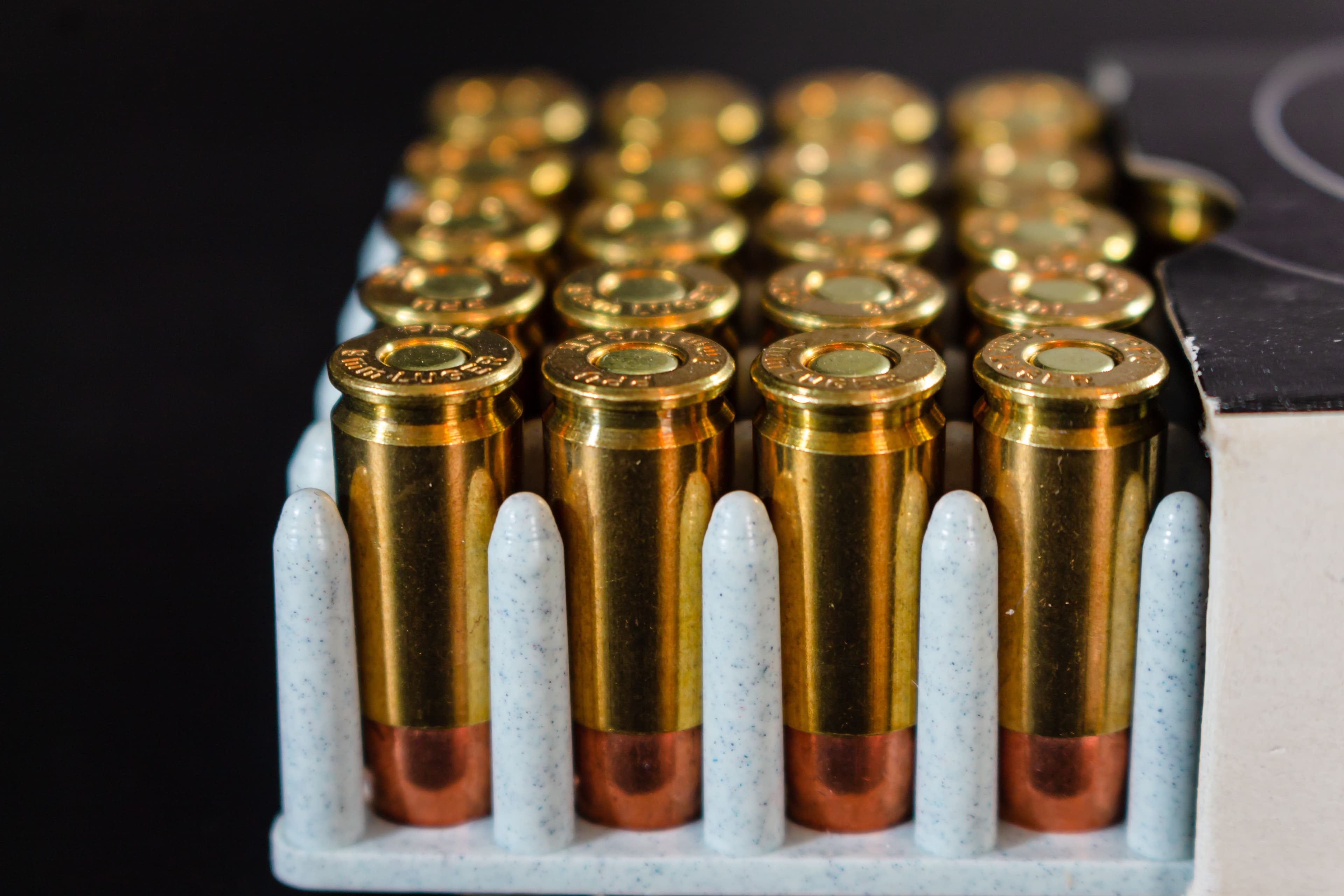
It is easy to think carefully about where a firearm is kept and give no thought at all to the ammunition sitting in the same cabinet. Ammunition is affected by heat and humidity too, and a garage that is a poor environment for a rifle is a poor environment for what you intend to feed it.
The practical signs are worth knowing. Corrosion or discolouration on cases, particularly green or white deposits around the case mouth or primer. Cases that look dull or blotchy compared with the rest of the box. Anything that has clearly been damp. Ammunition showing those signs is not something to work through and hope for the best with, and it is worth setting aside rather than chambering.
We are not going to advise on disposal specifics or get into anything beyond that here, because it varies and it is genuinely a question for the shop counter rather than an article. What matters for storage purposes is simply that ammunition belongs somewhere stable and dry alongside the firearm, and that a box which has been through years of garage temperature swings deserves a look before it gets used.
Before and After Long Term Storage
The most useful habit is treating storage as having two ends rather than one. A firearm cleaned properly before it goes away is starting from a good baseline, with no residue sitting on it for months. A firearm looked at when it comes back out gets any developing problem caught before it is put back into use.
Of the two, the clean beforehand does more work. Residue left on metal has months to act, and by the time the firearm is retrieved the damage has already happened. Owners who cycle firearms seasonally, particularly hunters who put a rifle away after a season and retrieve it a year later, get the most benefit from making this routine.
We deliberately do not publish specific product recommendations for this. The right approach depends on the firearm, its finish, and its materials, and a general rule applied to the wrong gun, particularly one with an older finish or wood furniture, can do harm. Ask when you drop something off and you will get an answer for your specific firearm.
When Storage Damage Becomes a Restoration Question
Most storage related problems are cleaning and maintenance jobs. A smaller number are not. Where corrosion has pitted metal, where a finish has failed across an area rather than a spot, or where wood has moved enough to affect fit, the conversation shifts from maintenance toward restoration.
That is not automatically bad news, and it is not automatically expensive. What it does mean is that the decision about how far to go becomes yours rather than obvious, particularly on an older or inherited firearm where original finish carries value of its own. Our firearm restoration page covers the range of what is possible, and our firearm cleaning page covers the maintenance end.
Serving Owners Across Pahrump and Southern Nevada
We see storage related work from across the region, from Pahrump and from customers driving out of Las Vegas and Henderson. It is one of the more seasonal patterns in the shop, with firearms arriving in clusters as people retrieve them ahead of a hunting season or after a long stretch in a safe.
If you have a firearm that has been stored for a long period, particularly somewhere unconditioned, having it looked at before you use it again is the sensible order of operations. Call the shop or use the contact page and describe how long it has been away and where it was kept. That alone tells us a good deal about what to expect.
Frequently Asked Questions
Does a dry climate mean I do not have to worry about rust?
+
Not entirely. The regional average matters less than the conditions where a firearm is actually stored. Spaces that swing widely in temperature, such as garages and vehicles, allow moisture to condense on cool metal even in a dry climate, and monsoon season is not uniformly dry either.
What is the worst place to store a firearm here?
+
Anywhere unconditioned that swings hard in temperature and collects dust, which usually means a garage, an outbuilding, or a vehicle. Sealed or foam lined cases used for long term storage can also trap moisture against the finish.
How do I tell surface rust from something worse?
+
Light surface discolouration caught early is usually straightforward. Once corrosion has pitted into the metal it is a different job. That distinction is worth having assessed properly rather than guessed at, especially inside a bore where it can be more advanced than it looks.
Should I clean a firearm before storing it or after retrieving it?
+
Both, but the clean beforehand does more work. Residue left on metal has the whole storage period to act, so by the time you retrieve the firearm the damage has already happened.
Why will you not recommend a specific oil or product?
+
Because the right approach depends on the firearm, its finish, and its materials. A general rule applied to the wrong gun, particularly one with an older finish or wood furniture, can cause harm. Ask at drop off and you will get an answer for your specific firearm.
When does storage damage become a restoration job?
+
When corrosion has pitted metal, a finish has failed across an area rather than a spot, or wood has moved enough to affect fit. At that point the decision about how far to take the work becomes yours, particularly on an older firearm where original finish has value.