
August 18, 2026 · Optics and Sights
Iron sights get taken for granted until they stop agreeing with the shooter. Then the usual sequence begins: the owner assumes it is them, shoots more, adjusts their hold to compensate, and eventually accepts that the firearm just shoots a bit left. Frequently none of that was necessary.
Sights are mechanical components fitted to a firearm, and like any other component they can be wrong from the outset, drift, or get damaged. This article covers why that happens, what installation and regulation actually involve, and when it is worth having a gunsmith look rather than compensating.
Installation and Regulation Are Different Jobs
The two terms get used interchangeably and they are not the same thing, which causes confusion at the counter.
Installation is fitting the sights to the firearm: getting them mounted securely, correctly located, and properly seated so they stay where they were put. Regulation is the separate question of whether the firearm actually shoots to the sights, and correcting it where it does not. A sight can be perfectly installed and still leave a firearm printing away from point of aim.
Knowing which you need shapes the conversation. If sights have been damaged or you want different ones fitted, that is installation. If the firearm has always shot away from where you are looking, or has started to, that is a regulation question and it may or may not involve fitting anything new.
Why Sights End Up Off Point of Aim
They Were Never Right for What You Shoot
This is the most common cause on older firearms with fixed sights, and it surprises people. Fixed sights are regulated at the factory for a particular load, and if nobody is shooting that load any more the firearm will print consistently away from point of aim through no fault of the shooter or the sights.
Owners of inherited revolvers and older rifles run into this regularly. The firearm is not broken, the sights are not damaged, and the shooter is not at fault. The firearm is simply regulated for something else.
Impact and Handling Damage
Sights sit proud of the firearm and take knocks. A rifle that has been transported loose, a handgun that has been dropped, or a firearm that has spent years in a crowded safe can all pick up a sight that has been shifted or bent without the owner noticing anything at the time.
Movement Under Use
Sights that were not correctly fitted, or that are held by fasteners that have loosened, can move gradually under recoil and repeated handling. On a carry handgun, holster contact adds another source of movement. A sight that shifts a little at a time produces a change the shooter adapts to rather than notices.
Wear on the Sight Picture Itself
Less dramatic but common. Dots wear, paint chips, fibre optic elements get damaged, and tritium inserts have a finite useful life. None of that moves the sight, but it changes how quickly and precisely the shooter can pick it up, which shows up in results.
What the Work Involves
The scope depends on the firearm and the platform, but the assessment follows a consistent shape.
- ◆A conversation about how the firearm is used and what it is doing now
- ◆Inspection of the existing sights, their mounting, and their condition
- ◆Assessment of the dovetails, screw holes, or mounting surfaces involved
- ◆Confirming whether the issue is installation, regulation, or something else entirely
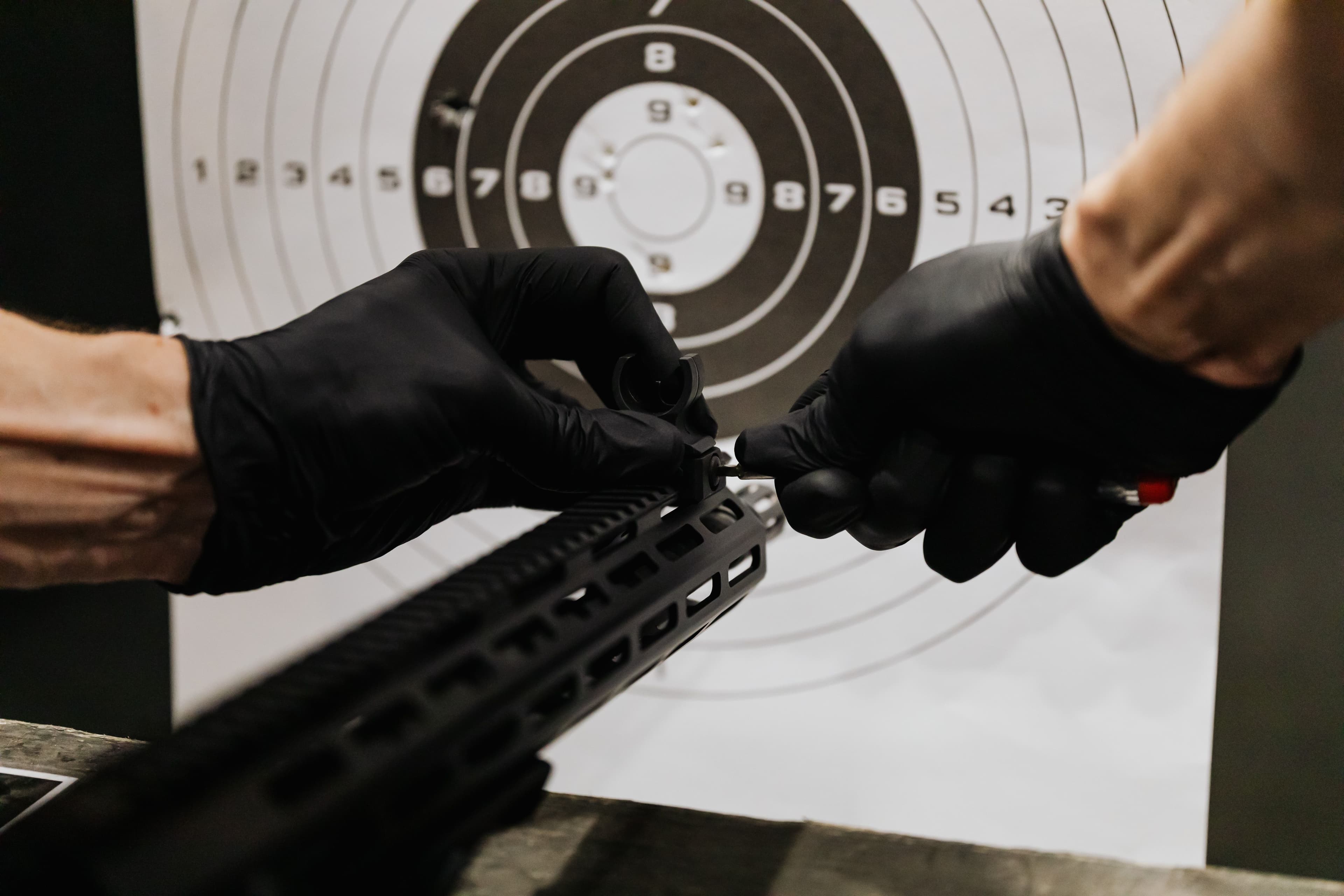
- ◆Fitting the sights properly so they are secure and correctly located
- ◆Checking that the result actually agrees with the firearm before it goes back
That fourth point saves customers money more often than any other. Not every complaint about sights turns out to be a sight problem. A loose scope base, a bedding issue, or ammunition the firearm does not shoot well can all produce symptoms owners attribute to sights, and establishing which it is comes before fitting anything.
We are describing what the work covers rather than how it is carried out. Dovetail work and sight fitting involve interference fits and mounting surfaces where an error damages the firearm, and drifting a sight with the wrong tools is one of the more common ways owners turn a small job into a larger one.
Night Sights, Fibre Optics, and Sight Pictures
Beyond position and security, there is the question of what you are actually looking at. Sight picture options have expanded considerably, and the differences matter more for some shooters than others.
Tritium inserts glow without any light source and have a finite useful life, typically measured in years, after which they gradually dim rather than failing outright. That gradual fade is why owners are often surprised to learn their night sights stopped being useful some time ago. Fibre optic elements gather ambient light and are excellent in daylight, though they depend on there being light to gather and the rods themselves can be damaged.
Which suits you depends on your eyes, your lighting conditions, and what the firearm is for. If you are already having sight work done, it is worth discussing at the same time, since fitting different sights during a job you are already paying for costs far less than a separate visit later.
Sights on Different Platforms
The considerations shift by firearm type. On handguns, sights take holster wear and impact, and the dovetails are unforgiving of poor fitting. On rifles, iron sights are increasingly a backup to an optic, which raises the question of whether they need to co-witness and how they interact with the mount. On cowboy action guns, period-correct sights are easy to knock out of alignment and their regulation is frequently the reason a familiar gun suddenly shoots off, something our cowboy action gunsmithing page covers alongside the rest of that work.
Shotguns are their own case. A bead is not a sight in the same sense, and a shotgun that does not shoot where the shooter is looking is far more often a fit problem than a sight problem. That is worth raising at intake because it points the work somewhere completely different.
Irons Alongside an Optic
A common request is iron sights retained as a backup to a red dot or magnified optic. Whether that works cleanly depends on the height of the optic, the mount, and the sights themselves, and it is worth discussing before parts are bought rather than after.
The frustrating version of this is a customer who has already purchased sights and a mount that cannot physically work together on their firearm. A short conversation beforehand avoids that, and we would much rather have it than tell someone their new parts are not compatible. Our scope mounting page covers the optic side.
When to Have Sights Looked At
Bring the firearm in if it consistently shoots away from point of aim and you have ruled out the obvious, if a sight looks damaged or has visibly moved, if you have started struggling to pick up the sight picture, or if you want different sights fitted. Bring it in as well if it is an older firearm with fixed sights that has never agreed with you.
If you are bringing it for a regulation question, a couple of targets are genuinely useful. Where the group sits and how tight it is tells us far more than a description, and it distinguishes a sight problem from an accuracy problem quickly.
We handle sight work for customers across Pahrump and from Las Vegas and Henderson, on handguns, rifles, and cowboy action guns alike. Our sight installation page covers the service, our rifle work page covers the wider accuracy picture, and the contact page is the quickest way to arrange a visit.
Frequently Asked Questions
What is the difference between installation and regulation?
+
Installation is fitting sights to the firearm so they are secure and correctly located. Regulation is the separate question of whether the firearm actually shoots to those sights, and correcting it where it does not. A sight can be perfectly installed and still leave a firearm printing off point of aim.
My old revolver has always shot left. Is that me?
+
Often not. Fixed sights are regulated at the factory for a particular load, and if nobody shoots that load any more the firearm will print consistently away from point of aim through no fault of the shooter. It is a common finding on inherited firearms.
Can sights move on their own?
+
They can shift gradually if they were not correctly fitted or if fasteners have loosened, and holster contact adds another source of movement on carry handguns. Because it happens a little at a time, shooters usually adapt rather than notice.
Should I drift a sight myself?
+
We would advise against it. Sight fitting involves interference fits and mounting surfaces where an error damages the firearm, and drifting a sight with the wrong tools is one of the more common ways a small job becomes a larger one.
Can I keep iron sights as a backup to an optic?
+
Often yes, but whether it works cleanly depends on optic height, the mount, and the sights themselves. It is worth discussing before you buy parts rather than after, since some combinations simply cannot work together on a given firearm.
What should I bring for a regulation question?
+
The firearm unloaded and cased, plus a couple of targets if you have them. Where the group sits and how tight it is tells us far more than a description, and it separates a sight problem from an accuracy problem quickly.