
September 2, 2026 · Gunsmithing Tips
We write a fair amount about single action revolvers because cowboy action shooting is a big part of what we do. But the majority of revolvers that come through the shop are not competition guns. They are carry revolvers, range guns, home defense guns, and family pieces that have been in a drawer for thirty years.
The mechanical principles carry across, and timing matters on every revolver regardless of what it is for. What changes is the priority. On a match gun the goal is a consistent, refined action. On a carry gun the goal is that it works, every time, without qualification. This article covers revolver service from that broader angle.
Timing and Lockup Apply to Every Revolver
Whatever the revolver is for, the same fundamental applies. Each chamber has to carry up and lock in alignment with the barrel before the hammer falls. Timing describes whether it arrives when it should, lockup describes how securely it is held once it does, and both get checked on every chamber rather than one, because wear is rarely even.
The symptoms owners report are consistent too. A cylinder that seems to catch or hesitate. A hammer or trigger that feels different on some chambers than others. Play in the cylinder when the hammer is back. Accuracy that has fallen off without any change to the sights or the ammunition.
That last one connects more directly than people expect. If a chamber is not properly aligned when the round leaves the case, the bullet is not entering the bore squarely, and the result is a revolver that groups worse than it should. An unexplained drop in accuracy is a reason to check timing, not only to check the sights.
Double Action Revolvers
The Double Action Pull Is a Different Problem
A double action pull does more work than a single action one. It rotates the cylinder, cocks the hammer, and releases it, all through one long stroke. That means more surfaces interacting and more opportunity for the stroke to develop the gritty, stacking, or uneven feel owners describe.
Action work on a double action addresses the surfaces actually causing that roughness, and sets spring rates appropriately for the gun. The constraint is the same as anywhere else and it is particularly important here: reliable ignition is not negotiable. A double action pull that has been lightened past the point where it reliably sets off a primer has failed at its only real job, and on a defensive revolver that is not an acceptable trade.
Carry Revolvers Specifically
Revolvers carried regularly collect lint, dust, and pocket debris, and they get handled far more than they get fired. Round count is a poor guide to when they need attention. What matters is that the mechanism is clean, that the action runs freely, and that nothing has migrated into the works.
For anyone carrying in the Las Vegas or Henderson area, where fine dust is a constant, this is worth taking seriously on a time basis rather than a round basis. A revolver is a simple, reliable design, but simple does not mean immune to contamination.
Single Action Revolvers Outside Competition
Plenty of single actions never see a match. They are range guns, hunting sidearms, or inherited pieces, and their owners want them to work well rather than to shave a fraction of a second off a stage.
The work overlaps heavily with what we do for competitors, but the emphasis shifts. There is less reason to push spring rates toward the light end and more reason to prioritise a smooth, dependable action that will tolerate infrequent use and imperfect storage. If you are not shooting a timer, there is very little to gain from an action at the edge of reliability and a fair amount to lose.
Our cowboy action gunsmithing page covers the competition end of this in detail, and much of it applies to any single action. The difference is mostly one of priorities rather than technique.
Older and Inherited Revolvers
A large share of the revolvers we see arrive with a family history and the same question attached: is it safe to shoot? That is the right question, and the right sequence is inspection before ammunition rather than the other way around.
The concerns on an older revolver are specific. Timing and lockup, since wear accumulates over a long life. Bore and chamber condition, especially after storage. Whether components are cracked or have been altered at some point, which is common on guns that have passed through several hands. And the question of what the firearm is suited to, which on an older revolver is a judgement for someone with the gun in front of them rather than a general rule.
We will tell you plainly if a revolver should not be returned to service. Sometimes a part is worn past safe tolerance with no realistic replacement, and a firearm in that position is still worth keeping and stabilising, it just should not be loaded.
Grips and Sights
Two things owners ask about regularly that are neither timing nor action work, and both make a genuine difference to how a revolver shoots.
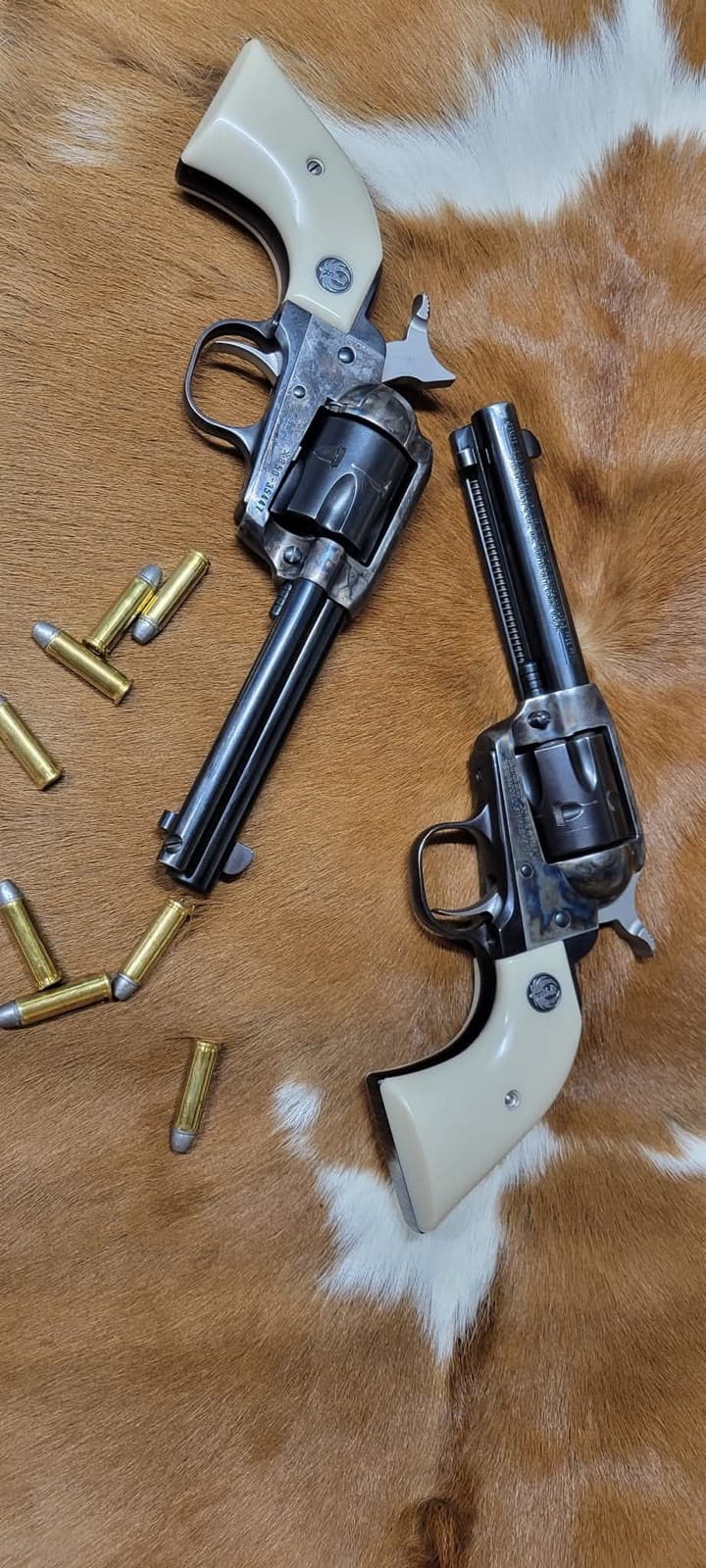
Grips are the more overlooked of the two. A revolver that does not fit the hand well is harder to hold consistently and less comfortable under recoil, and on a carry gun that affects how confidently it is handled. Grip changes are among the more straightforward improvements available and can noticeably change how a revolver feels without touching the mechanism at all.
Sights are the other. Older revolvers frequently have fixed sights that were regulated at the factory for a load nobody is shooting any more, which leaves the gun printing consistently away from point of aim through no fault of the shooter. Sight work and, where appropriate, regulation can address that. If a revolver has always shot away from where you are looking and you have assumed it is you, mention it and we will take a look.
What Revolver Service Covers
The scope depends on the revolver and what brought it in, but the assessment is consistent.
- ◆Timing and lockup on every chamber
- ◆Cylinder gap and general fit assessment
- ◆Action feel, and identification of the surfaces causing any roughness
- ◆Spring condition, set for a clean action with reliable ignition
- ◆Bore and chamber condition, including fouling and corrosion
- ◆Cleaning to the level the revolver needs, which on a carry gun is often substantial
- ◆Function testing before it goes back to you
That is what gets checked rather than how anything is corrected. Revolver fire control and lockup components sit in the category where an error produces an unsafe firearm, so this is bench work with proper measuring tools, not a home project.
When to Bring a Revolver In
Bring it in if the cylinder catches or hesitates, if lockup feels loose, if the action feels different from how it used to, if accuracy has dropped without explanation, or if a carry revolver has simply been carried a long time without attention. Bring it in as well if it is new to you, inherited, or has been in storage for years.
We handle revolver work for customers in Pahrump and for owners travelling from Las Vegas, Henderson, and across Southern Nevada, covering carry guns, range guns, competition single actions, and family pieces alike. Our handgun work page covers the service, and the contact page is the quickest way to arrange a drop off. If you are unsure whether what you are noticing warrants a visit, call and describe it and we will tell you honestly.
Frequently Asked Questions
Does timing matter on a double action revolver too?
+
Yes. Every revolver depends on each chamber carrying up and locking in alignment with the barrel before the hammer falls. Timing and lockup get checked on every chamber regardless of whether the gun is a match gun, a carry gun, or a family piece.
Can you smooth a double action trigger pull?
+
Yes. A double action stroke rotates the cylinder, cocks the hammer, and releases it, so there are more surfaces involved and more scope for roughness. We address the surfaces causing it and set spring rates appropriately, without lightening past reliable ignition.
How often should a carry revolver be serviced?
+
On a time basis rather than a round basis. Carry revolvers collect lint, dust, and pocket debris and are handled far more than they are fired, so round count is a poor guide, particularly in dusty Southern Nevada conditions.
Is a revolver that is not indexing reliably safe to shoot?
+
It should be inspected before further use rather than shot through. A revolver that is not indexing correctly is not a cosmetic complaint.
My revolver groups worse than it used to. Could that be mechanical?
+
It can be. If a chamber is not properly aligned when the round leaves the case, the bullet does not enter the bore squarely and accuracy suffers. An unexplained drop in accuracy is a reason to check timing, not only the sights.
What about an inherited revolver that has not been fired in years?
+
Have it inspected before any live fire. The concerns are timing and lockup after a long life, bore and chamber condition after storage, and whether components are cracked or have been altered. None of those are visible from the outside.