
August 17, 2026 · Shop Updates
Customers ask about this regularly, usually in one of two situations. Either they are at an event and something has gone wrong, or they have several firearms and the logistics of getting them to a shop are awkward. Both are reasonable, and the answer is more nuanced than yes or no.
The short version is this. Mobile and onsite service support may be available by appointment, depending on the service requested and applicable federal, state, and local requirements. What that means in practice is worth unpacking, because the phrase covers a genuine range and it is better to understand the shape of it than to guess.
Why It Is Not a Simple Yes
There are two separate constraints, and they are frequently confused with each other.
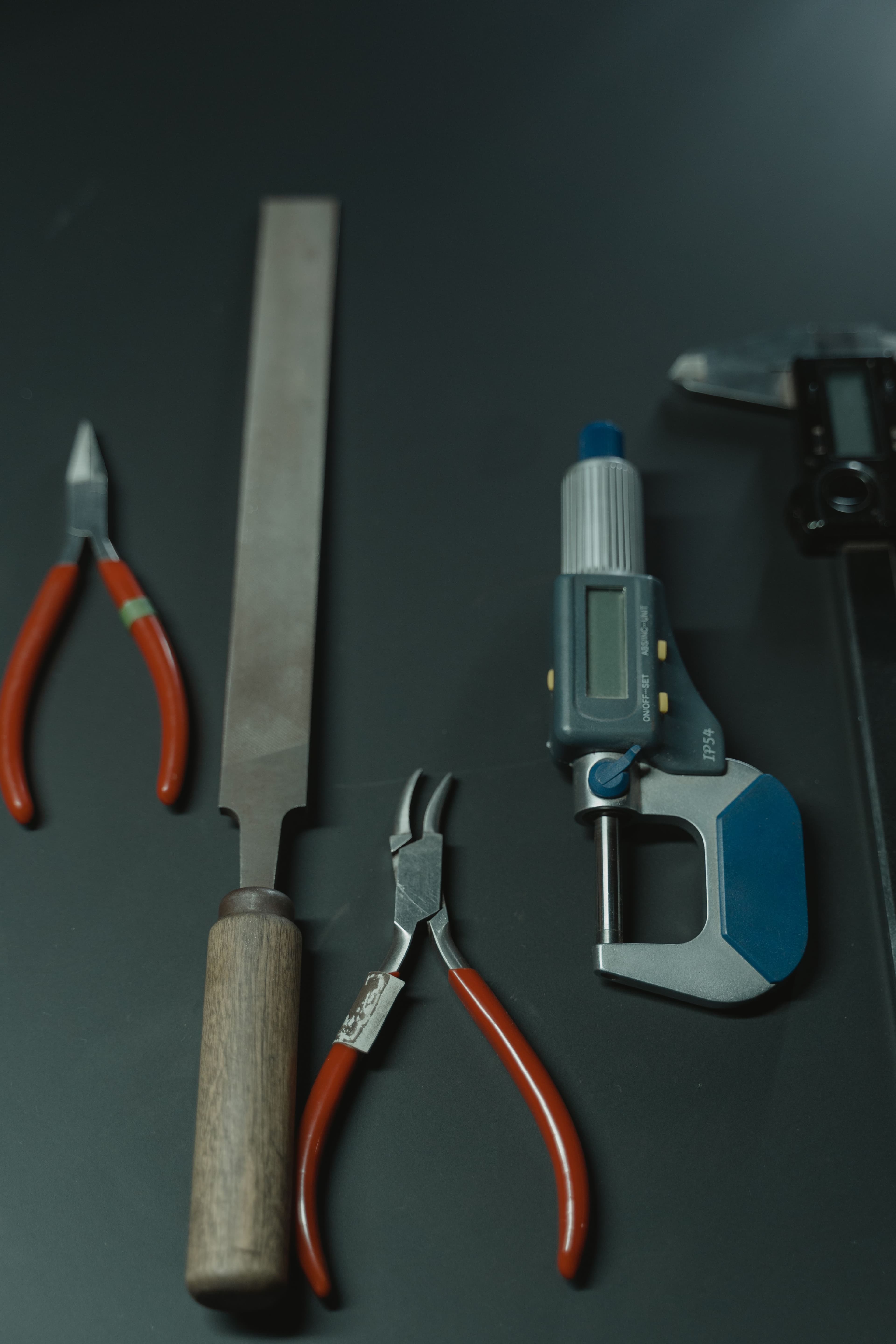
The first is practical. A great deal of gunsmithing depends on equipment that does not travel: fixtures that hold a firearm correctly, measuring tools, a proper bench, and the controlled conditions certain work requires. Some tasks simply cannot be done to the same standard away from that, and doing them badly in the field is worse than not doing them.
The second is regulatory. Requirements apply to firearms work, and they do not change because the work is happening somewhere other than the shop. What can be undertaken away from the bench is shaped by those requirements as much as by what is physically possible, and that is why the answer is always subject to the service requested and the applicable rules rather than being a blanket policy.
Neither of those is a reason to avoid asking. They are reasons the honest answer comes after a conversation about the specific job rather than before it.
The Kind of Work That Travels Better
Without promising anything for a particular situation, the general pattern is that assessment travels more easily than correction.
Looking at a firearm, understanding what it is doing, and telling an owner what they are dealing with needs judgement and experience more than it needs a workshop. Advising whether something should be taken out of service, whether a problem is urgent, or whether what someone is experiencing is mechanical at all can frequently be done wherever the firearm is.
Correction is different. Anything involving fitting, measurement, or the fire control group belongs on a bench, and that is not a matter of preference. Work on the components that determine whether a firearm fires safely and only when intended is precision work, and it needs the right tools and conditions to be done properly.
Where This Comes Up Most
Cowboy Action Matches and Shooting Events
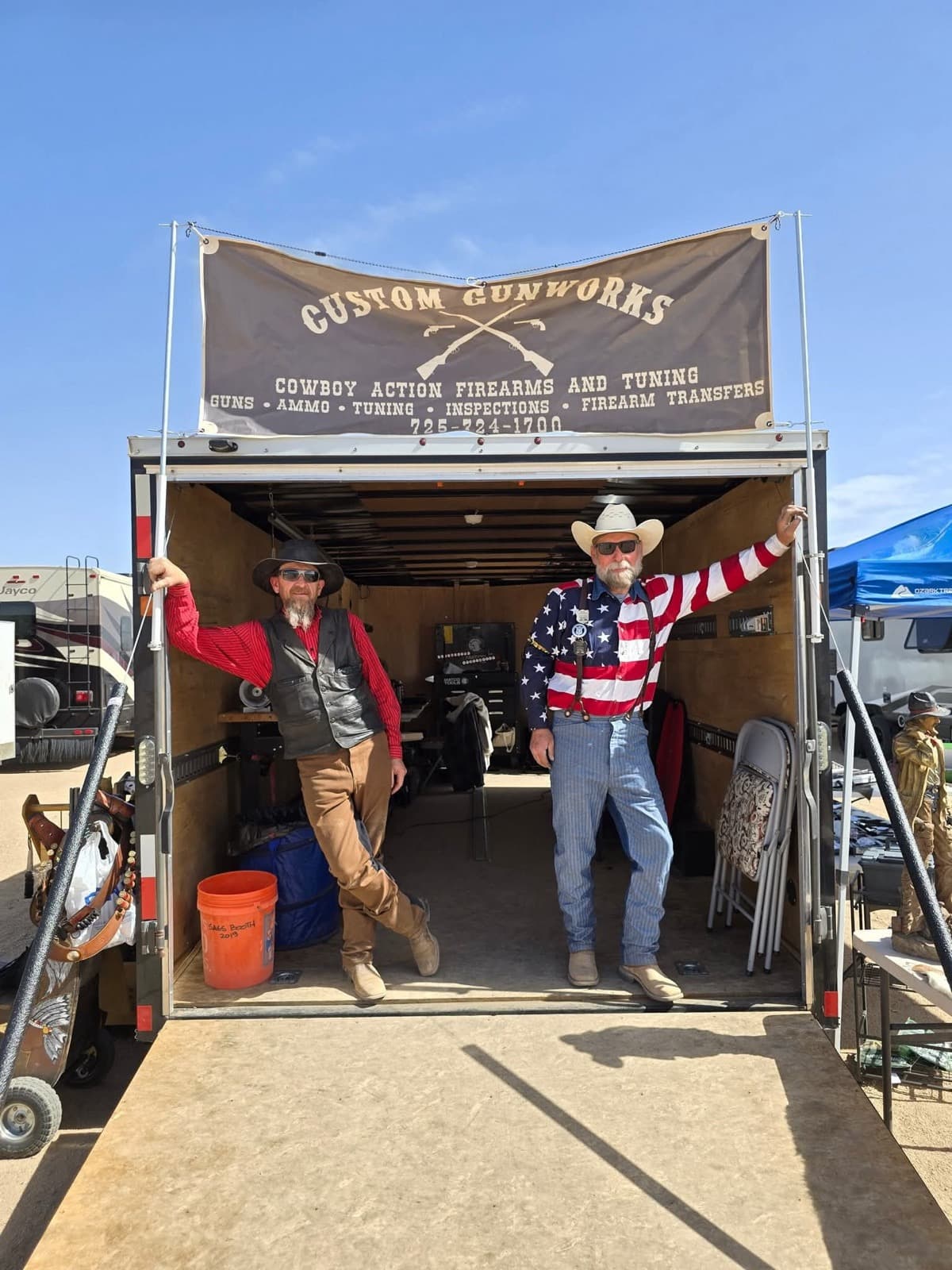
The most common context by a distance. Competitors at a match have a gun behaving badly, the day is underway, and the question is whether anything can be done now. This is also where an assessment has the most value even when a correction is not possible, because knowing whether a firearm should keep being used is the decision that actually matters at that moment.
Our cowboy action gunsmithing page covers the bench side of this work, and a good share of the conversations that start at an event finish at the shop the following week.
Multiple Firearms and Awkward Logistics
Estates, collections, and situations where someone has inherited several firearms at once. The practical question here is usually about assessment rather than repair: what is here, what condition is it in, and what needs attention first. That is a genuinely useful thing to establish before anything moves anywhere.
Distance
Southern Nevada is spread out, and for some customers the drive is a real consideration. Worth saying plainly though: for most jobs, bringing the firearm to the shop is both simpler and produces a better result, and it is what we would suggest for anything beyond assessment.
There is a fair question about cost buried in this as well. Time spent travelling is time not spent at the bench, and that is reflected in how onsite work is arranged. For a single firearm with a straightforward problem, the drive to Pahrump is usually the better option for the customer as much as for us. Where onsite support genuinely earns its place is where several firearms are involved, or where an event makes the timing matter.
How Availability Actually Works
By appointment, arranged case by case, and confirmed for the specific service in question. There is no standing schedule and no general promise, and we would be wary of any shop that offered one.
The practical route is a phone call describing what you have and what you need. From that we can usually tell quickly whether it is something that can be supported away from the bench, whether it needs to come to the shop, or whether an assessment now and bench work later is the sensible sequence.
- ◆Describe the firearm and what it is doing, in your own words
- ◆Say where you are and what the timing constraint is, if there is one
- ◆Mention if this is an event, an estate, or a single firearm
- ◆Expect an honest answer about whether onsite support is appropriate here
- ◆Expect the bench to be the recommendation for anything involving fitting or measurement
- ◆Nothing is confirmed until the specific service has been discussed
That last point is not a formality. Availability varies, requirements vary by service, and an answer that applied to someone else's situation may not apply to yours.
If Onsite Support Is Arranged
Where it does go ahead, the shape of it is worth setting out so that expectations match reality.
The main thing to understand is that an onsite visit is not the shop relocated. It is a gunsmith with judgement, experience, and the portable part of the toolkit, which is a genuinely useful combination but a narrower one than a bench. The most common outcome is a clear answer about what is wrong and what should happen next, and that answer has real value on its own even when it ends with the firearm coming to the shop anyway.
It helps to have the firearm accessible, unloaded, and cased, along with the ammunition and magazines if the problem involves cycling. The same information that makes a counter conversation productive makes an onsite one productive, with the difference that there is no opportunity to go and fetch whatever was left at home.
What We Will Not Promise
Worth being direct, because vagueness here does nobody any favours.
We are not going to make claims about transporting firearms on a customer's behalf, and we are not going to offer a route around a requirement because it would be more convenient. If something is not appropriate to do away from the shop, whether for practical or regulatory reasons, you will be told that rather than offered a workaround.
That is the same standard we apply to everything else. A shop that is flexible about which rules apply is not a shop that should be handling your firearm, and the flexibility usually turns out to be at the customer's risk rather than the shop's.
We are also not going to give a firm answer about a situation we have not heard described. If anyone tells you what is possible onsite without knowing what firearm is involved or what needs doing to it, they are guessing, and guessing is how people end up in difficulty in this area.
Serving Pahrump, Las Vegas, and Henderson
Our shop is in Pahrump, roughly an hour from the Las Vegas valley, and we work with customers from Las Vegas, Henderson, and across Southern Nevada. Most of that work happens at the bench, which is where it should happen.
If you are wondering whether your situation is one where onsite support makes sense, the fastest way to find out is to ask. You can read more about the shop on our about page, see the full range of work on our services page, and reach us through the contact page. Mobile and onsite service support may be available by appointment, depending on the service requested and applicable federal, state, and local requirements.
Frequently Asked Questions
Do you offer mobile or onsite service?
+
Mobile and onsite service support may be available by appointment, depending on the service requested and applicable federal, state, and local requirements. It is arranged case by case rather than on a standing schedule, so the practical step is to call and describe what you need.
Why can some work not be done away from the shop?
+
Two reasons. Practically, a great deal of gunsmithing depends on fixtures, measuring tools, and a proper bench that do not travel. Separately, requirements apply to firearms work and do not change because the location does.
What kind of work travels best?
+
Assessment rather than correction. Looking at a firearm and telling you what you are dealing with needs judgement more than a workshop. Anything involving fitting, measurement, or the fire control group belongs on a bench.
Can you help at a cowboy action match?
+
That is the most common context for the question, and it is worth asking. Even where a correction is not possible on the day, knowing whether a firearm should keep being used is usually the decision that actually matters at that moment.
I have inherited several firearms. Can you look at them where they are?
+
Assessment is often the useful first step in that situation, establishing what is there and what needs attention first. Ask and we will tell you honestly whether onsite support suits your circumstances.
Will you transport firearms for me?
+
We do not make claims about transporting firearms on a customer's behalf, and we will not offer a route around a requirement for convenience. If something is not appropriate to do away from the shop, you will be told that rather than offered a workaround.